
Yesterday marked the conclusion of the final stage of POM 2026, in Fátima, where the leading figures were Rafael Miguel and Bruno Nazário, the event director and technical director, respectively.
The story began on 24 January 2026, when weather forecasts suggested that February would be a month of heavy rain—except during the days of Portugal O Meeting. On that day, Rafael wrote in a private forum: “I’m almost tempted to say that if it stays like this, I’ll run from Mira to Fátima!”
The break in the rain and the arrival of sunshine eventually came between 13 and 18 February, delivering an event free of precipitation after nearly three consecutive months of rain. At the time, no one could have foreseen that Storm Kristin would strike Portugal on 28 January, devastating large forested areas but, fortunately, leaving untouched the Mira Norte map area, meticulously surveyed by Rafael over the previous six months and reviewed by Ori-Estarreja athletes over two consecutive days, searching for terrain changes following the storm.
Not even the need, in the week leading up to POM 2026, to build crossings over watercourses and along usually dry paths was enough to alter the plans. Delivering the event exactly as planned remained an untouchded goal for all involved.
Calmer weather arrived over the Carnival weekend. POM 2026 proved to be an event of excellence: the skies held blue, and Ori-Estarreja demonstrated that, despite the challenges, they rose to the level of the extensive technical work carried out by Rafael and Bruno, to the satisfaction of 2,600 athletes from 37 countries.
As the curtain fell on POM 2026, the promise was recalled—and over the Easter weekend, it was set in motion.
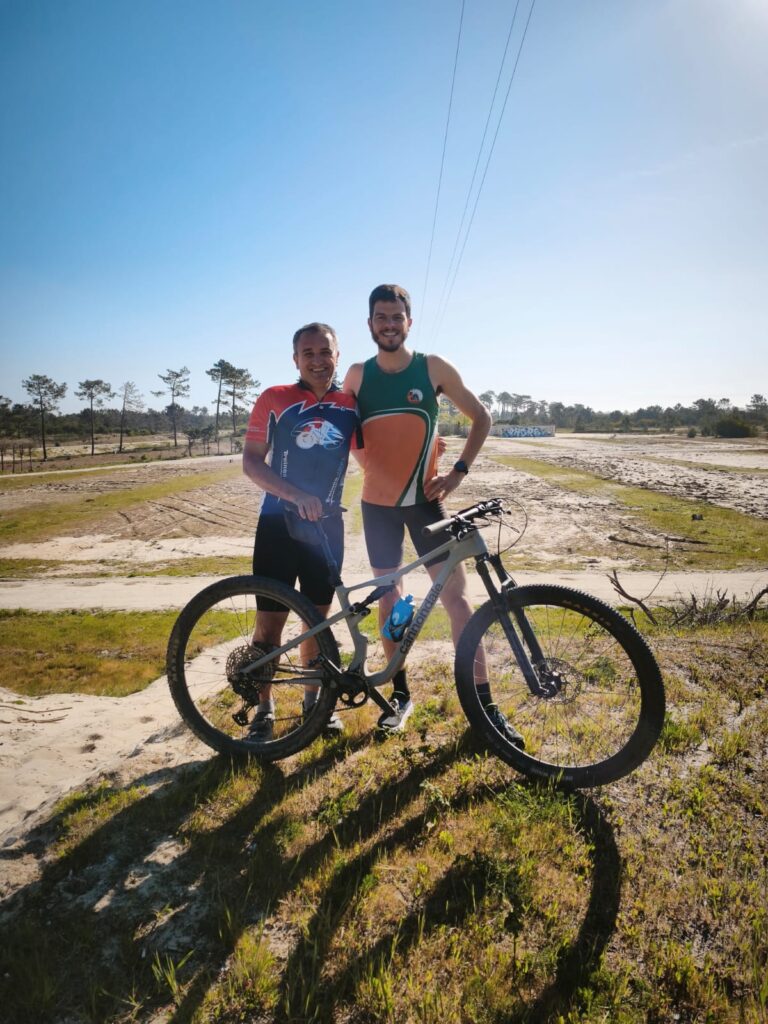
On Good Friday, precisely at the POM 2026 Arena, Rafael began fulfilling his promise to reach Fátima: running, while Bruno cycled alongside, providing constant support with nutrition, hydration, and motivation. Inês Aires ensured the logistics throughout the stages.
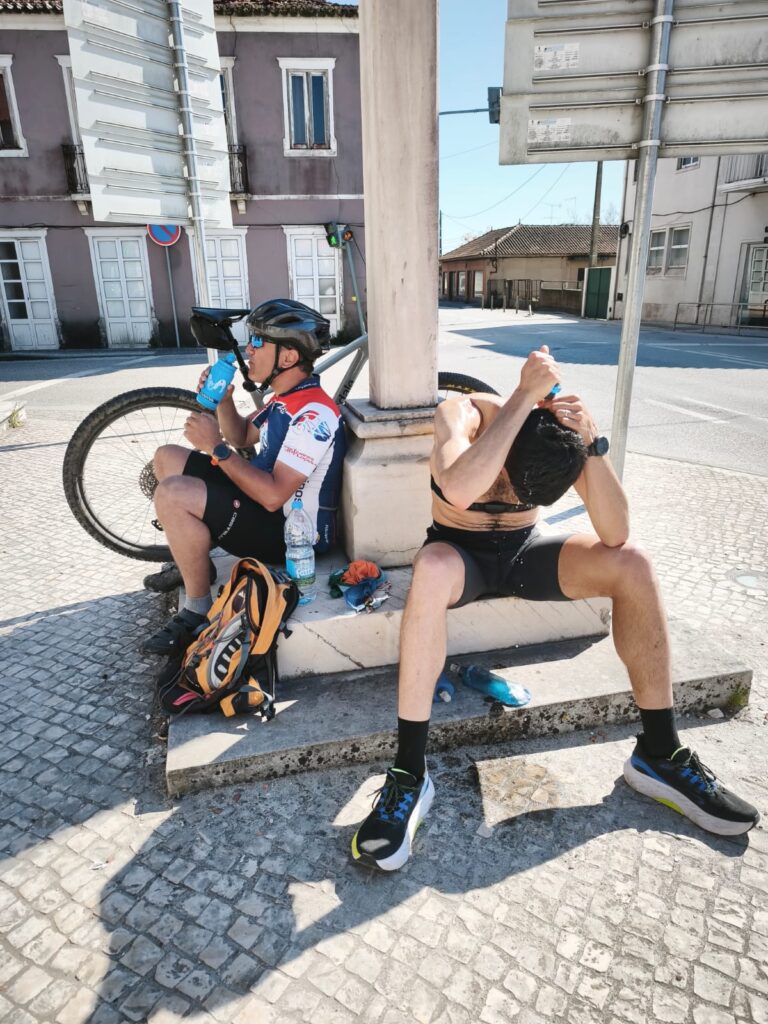
From Mira Norte to Guia, the first stage was completed in 5h38m38s, covering a total of 66.16 km at a pace of 5:07/km, with only 20 minutes of stops for refuelling.
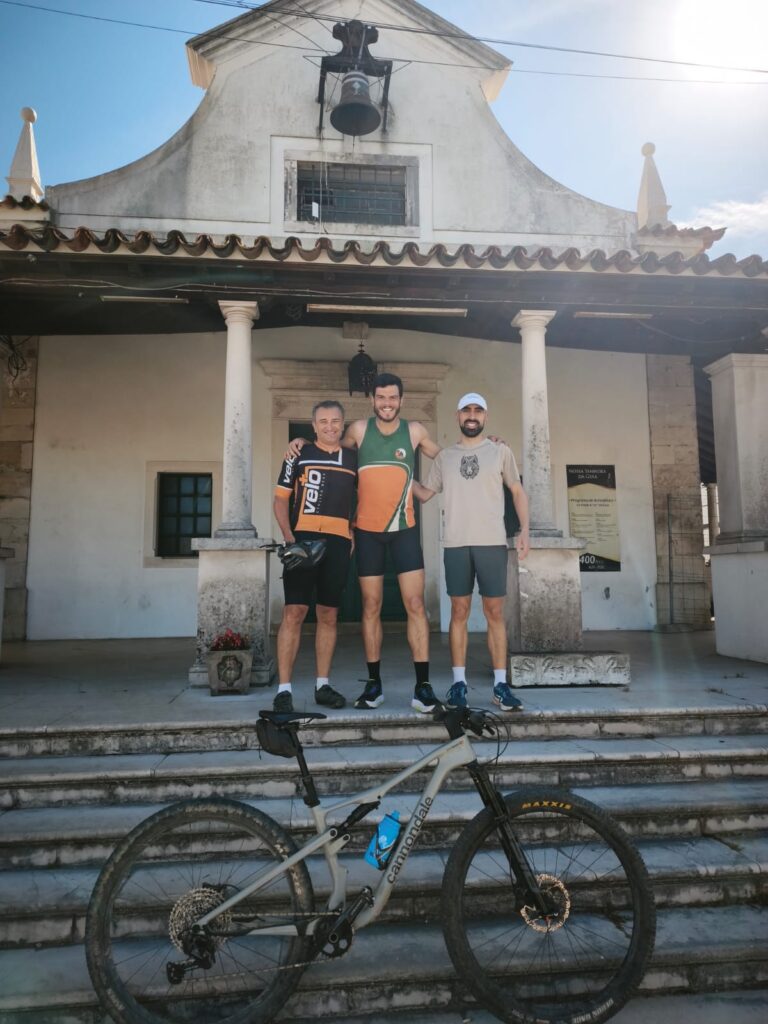
After an evening and night of rest, the two pilgrims returned the following morning to the doorstep of Guia Church to resume the journey—where the first surprise of the day emerged: Ori-Estarreja athlete André Pedrosa joined the route to set the pace for 20 km and help maintain focus on the final goal.
The final 23 km to Fátima brought demanding climbs, and with them, fatigue. Rafael had to slightly reduce his pace on the ascents, though he rarely resorted to walking.
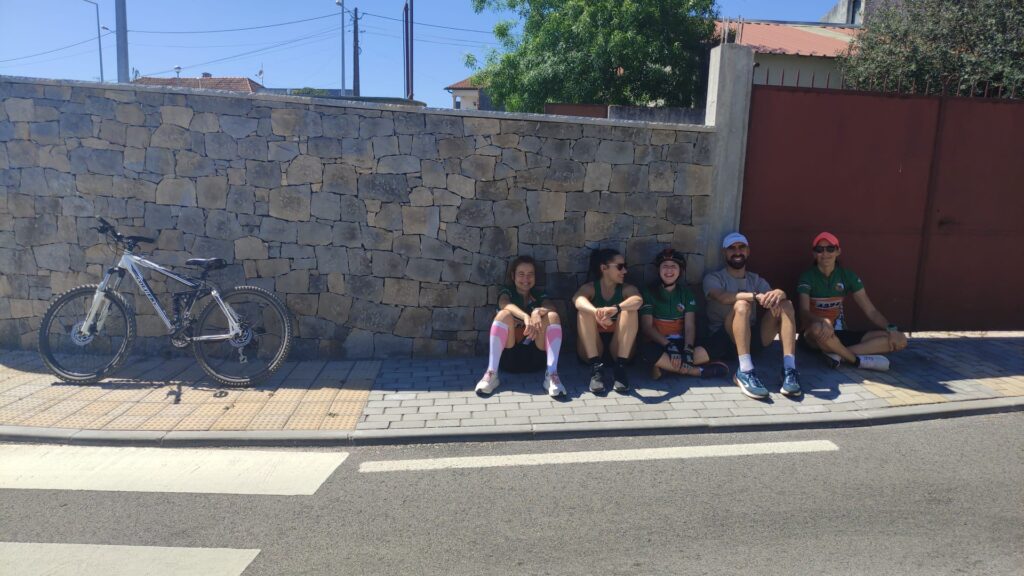
Around 6 km from the finish came the second surprise: Ori-Estarreja awaited Rafael and Bruno in Santa Catarina da Serra with a group of six members, travelling from their “home base” to accompany them to the Sanctuary of Fátima, on foot and by bicycle, with Inês and André now part of the group. In the support vehicle, founding member Altino Silva assured the final assistance.
What followed was an unforgettable moment. As soon as Rafael felt the presence and support of his club teammates, fatigue seemed to vanish, motivation surged, and his pace increased significantly. No one—except the bicycles—managed to arrive alongside him at Cova de Iria. We stayed together for a while, but it was impossible to hold back this force of nature, who covered the final 2.5 km at under 5 minutes per kilometre.
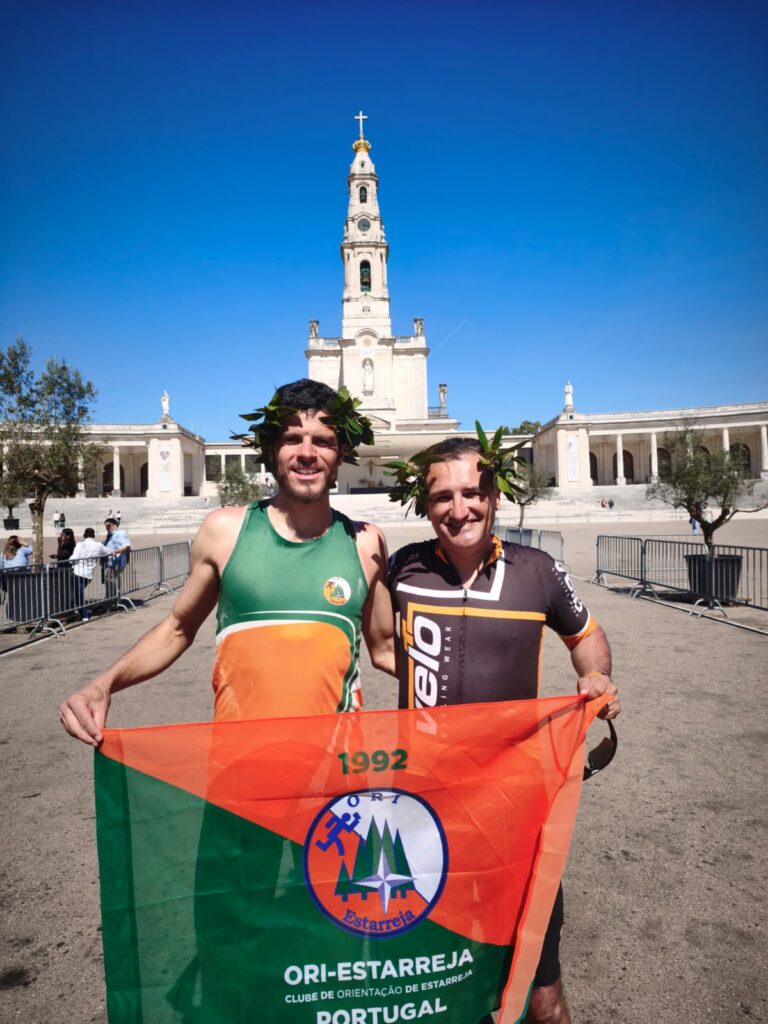
In a finish marked by heat and emotion, we regrouped on the steps of the Basilica of the Sanctuary, where all that remained was to share a heartfelt embrace with the protagonists, after 3h59m52s to complete the 42.29 km of the second stage, at an impressive pace of 5:40/km.
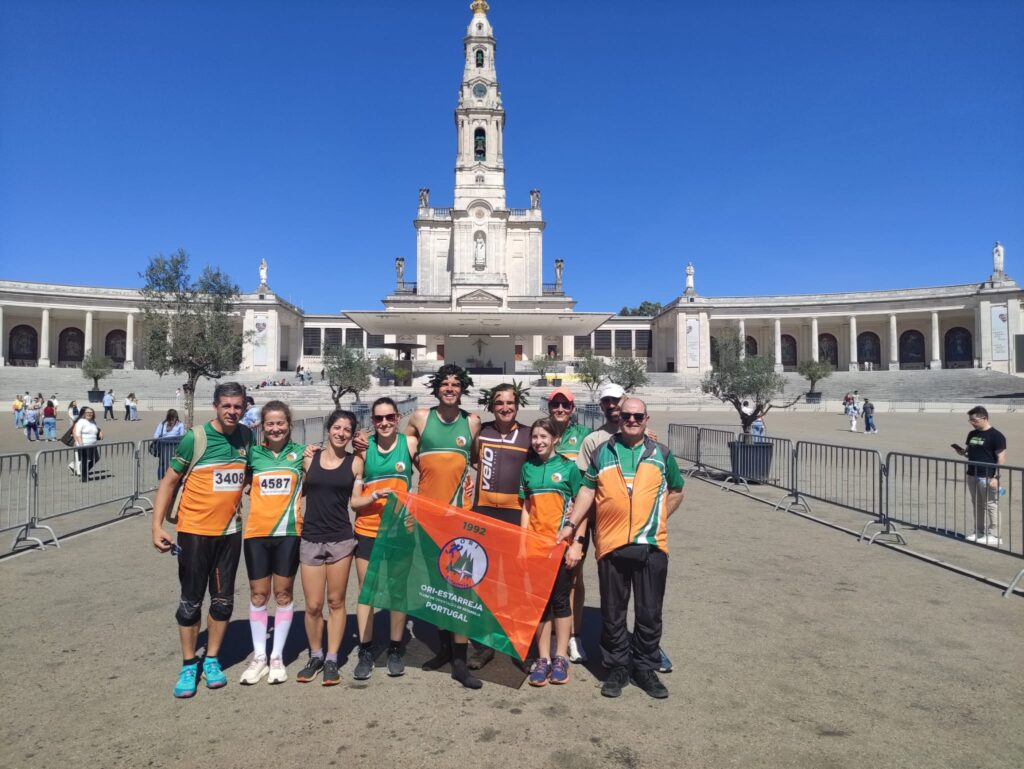
At that moment, we all felt that the strength and determination Rafael demonstrated during POM, combined with Bruno Nazário’s technical rigour, were the very ingredients that made this achievement possible. It left a powerful sense that anything can be achieved—that belief in effort and teamwork is worthwhile—and that such promises carry a deeply positive meaning: one of self-improvement and example, showing that “God wills, man dreams, the work is born.” (Fernando Pessoa).
I write these words with the satisfaction of having witnessed an act within the reach of an elite athlete—someone who lives orienteering and becomes a true source of inspiration.
Author: Nuno Pires